Two Rows › Food pairing
What actually gets cooked near each region
The best pairing logic isn't abstract wine theory — it's what's genuinely local. Marlborough sits on the coast with easy access to seafood; Central Otago is inland high country known for stone fruit and game. Both regions build their food culture around what grows or swims nearby, and it happens to pair well with the wine for the same reason.
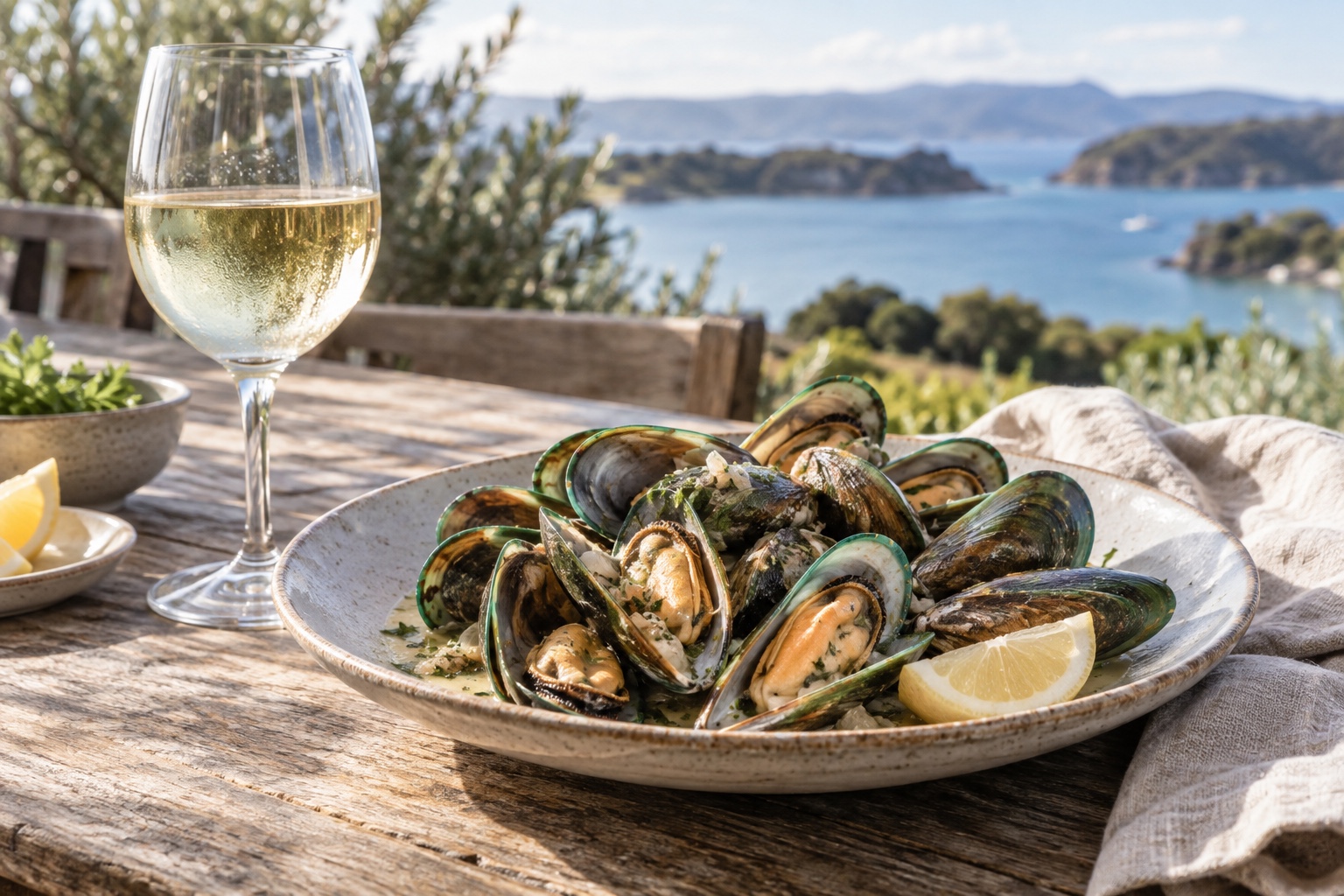
Green-lipped mussels and Sauvignon Blanc's high acid
New Zealand's green-lipped mussel, farmed extensively in the Marlborough Sounds nearby, is the textbook local pairing: the wine's citrus-driven acidity cuts through the mussel's natural sweetness and brine, while its herbaceous notes echo whatever fresh herb the mussels are steamed with. Marlborough Sauvignon Blanc's high acidity works the same way with most local seafood and salads built around goat's cheese.
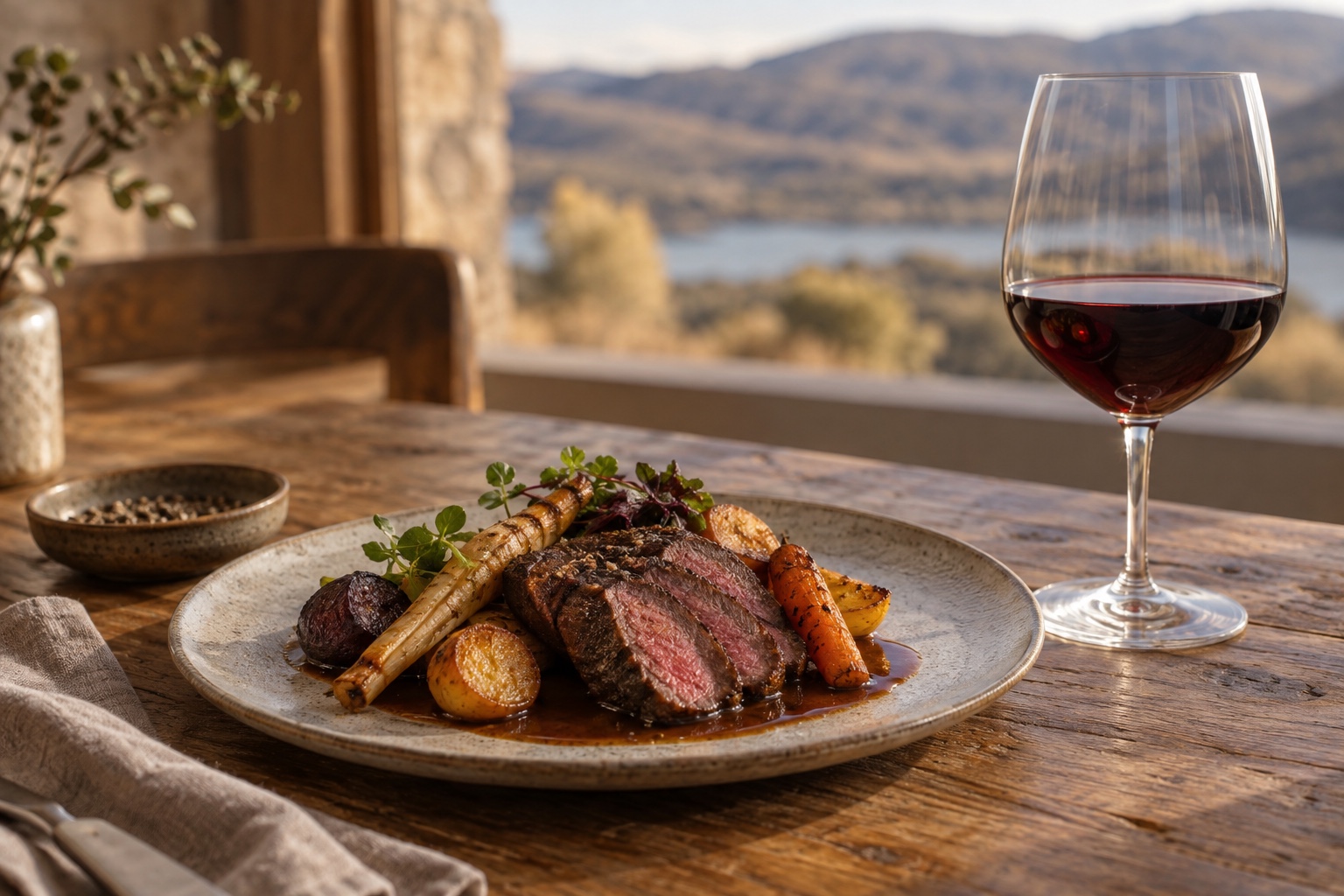
Venison, salmon, and Pinot Noir's structure
Central Otago's high country supports wild and farmed venison, and the region sits close to some of the South Island's salmon farming. Both are classic Pinot Noir partners for a structural reason, not just a regional one: the grape's moderate tannin and bright acidity handle rich, fatty proteins — venison's gaminess or salmon's oil content — without overwhelming them the way a heavier red would.
Stone fruit, particularly apricots and cherries grown in the same dry Central Otago basin, also turns up constantly on local menus and in the wine's own tasting notes.