
Marlborough — Sauvignon Blanc

Central Otago — Pinot Noir
New Zealand's two great wine countries don't share a border. They share a road trip.
Marlborough grows 90% of the country's Sauvignon Blanc on a flat, sun-soaked river plain at the top of the South Island. Central Otago grows the world's southernmost commercial Pinot Noir on dry schist slopes, nearly eight hundred kilometres south. This guide treats them honestly: as two separate trips that can, with the right amount of time, become one.
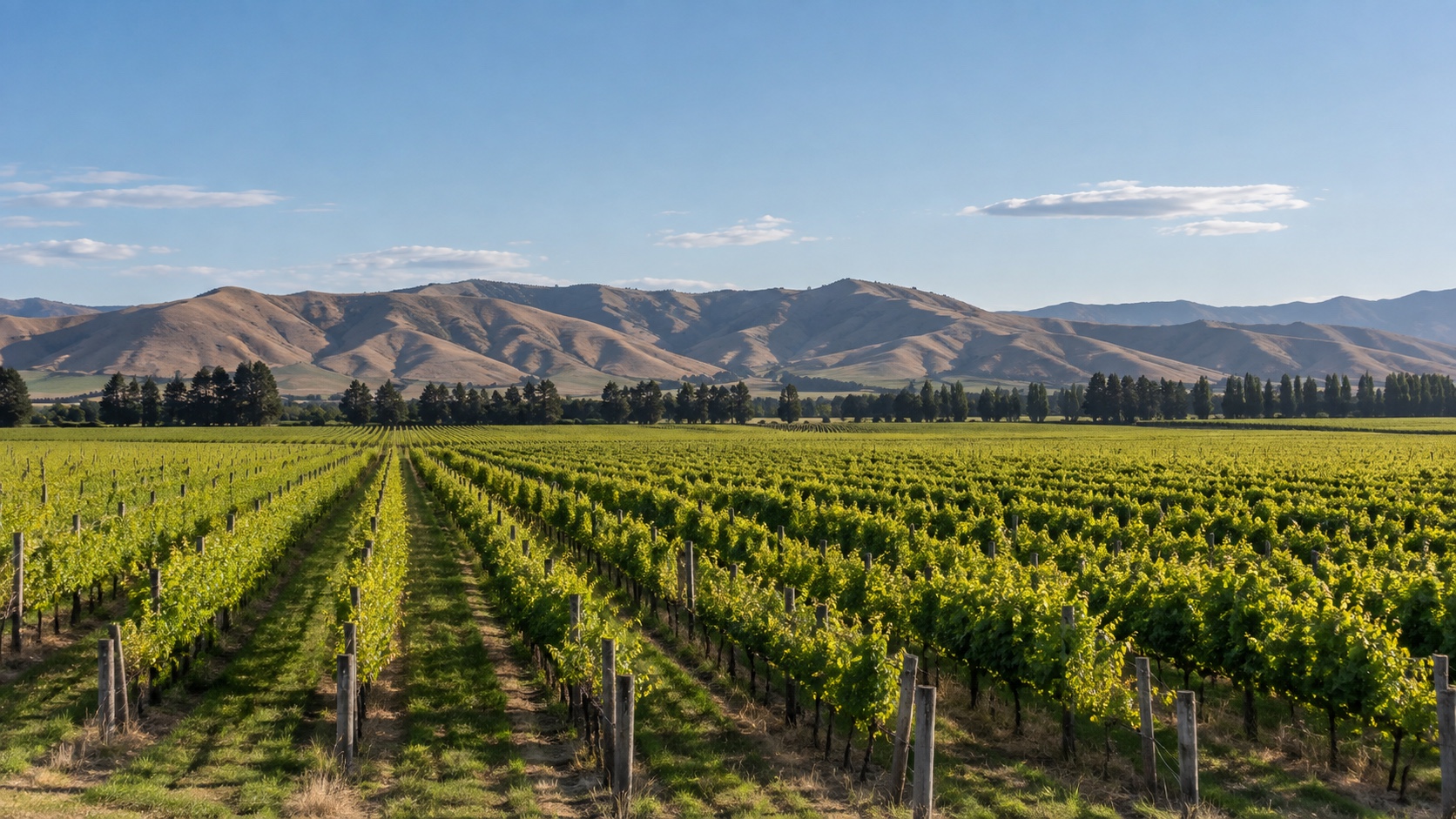
One valley grows nearly half of it
Marlborough holds about two-thirds of all vineyard land in New Zealand, and within it, the Wairau Valley alone accounts for roughly 45% of Marlborough's plantings. It's a long, flat glacial valley following the Wairau River out to Cloudy Bay — the source of the ripe, aromatic style most people picture when they think "New Zealand Sauvignon Blanc."
- Vineyard area
- 27,808 ha
- Wineries
- 158
- Of NZ's Sauvignon Blanc
- 90%
The world's southernmost fine wine
Central Otago is the world's southernmost commercially significant wine region — a semi-continental basin of dry schist and big temperature swings that Pinot Noir, a notoriously fussy grape, turns out to love. Bannockburn runs hottest and produces the region's most concentrated wines; Gibbston, higher and cooler, made New Zealand's first commercially released Pinot Noir back in 1987.
- Warmest sub-region
- Bannockburn
- First release
- 1987, Gibbston
- Southernmost sub-region
- Bendigo

Build your own tasting flight
Answer two honest questions — what you actually like to drink, and how much time you actually have — and get a real recommendation, not a marketing brochure.

Cellar doors are real working wineries, not tour stops
Most cellar doors in both regions are small, family-run tasting rooms attached to an actual working winery — not the polished, bus-tour-ready operations you might expect. Bookings matter more than you'd think, driving between tastings needs a plan, and the best conversations happen when you're not the fifth group through that hour.